Top 10 Facts About Ncr Carbonless Paper You Should Know?
Ncr Carbonless Paper has transformed how businesses handle paperwork. This innovative solution eliminates the need for carbon sheets while ensuring clear and precise copies. According to a recent market analysis by Smith Research, the global carbonless paper market is projected to grow at a steady rate of 5% annually. This trend highlights the increasing demand for efficient and eco-friendly paper solutions.
Industry expert, Dr. Emily Carter, highlights the importance of Ncr Carbonless Paper, stating, “Its ability to reduce waste while providing quality records is unmatched.” In an age where sustainability matters, Ncr Carbonless Paper stands out. However, challenges remain. Some users report issues with print quality in high-volume settings, prompting a need for continual innovation.
Ncr Carbonless Paper plays a crucial role in various sectors, from retail to healthcare. Businesses must weigh its benefits against potential drawbacks. As the industry evolves, understanding these dynamics becomes essential for choosing the right paper solutions.
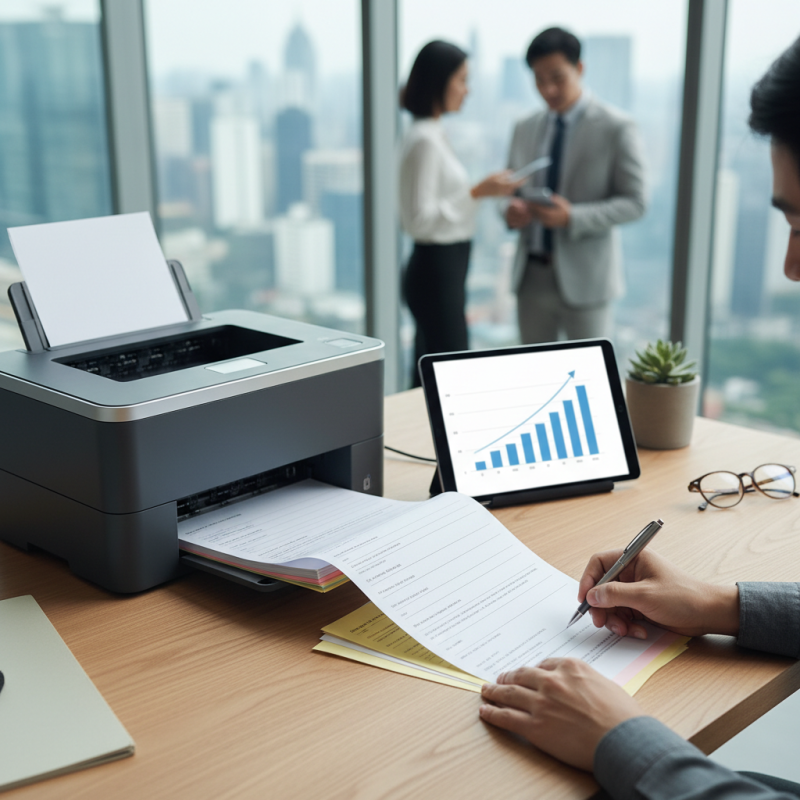
What is NCR Carbonless Paper and How Does It Work?
NCR carbonless paper is a unique type of paper that helps create copies without needing carbon sheets. It's widely used in business forms, invoices, and receipts. The technology behind it is fascinating yet simple. When pressure is applied, tiny microcapsules burst and release dye, creating an image on the sheet below. This process makes generating duplicates quick and efficient.
Using NCR carbonless paper can offer significant benefits. It reduces the mess of traditional carbon copies. However, there are challenges. Users must ensure proper alignment, as misalignment can lead to unreadable duplicates. The paper is sensitive to temperature and humidity, which can affect its performance. If not stored properly, it may not work as intended.
A lot of people overlook the importance of choosing the right weight and type of carbonless paper for their specific needs. Exploring different options is key. Although it simplifies many tasks, awareness of its limitations is also necessary. Understanding both its advantages and drawbacks ensures better use in daily operations.
The History and Development of NCR Carbonless Paper
NCR carbonless paper revolutionized documentation. Its invention dates back to the 1950s. A chemical process allows copies without carbon layers. This innovation simplified office tasks and reduced waste. Businesses shifted from traditional methods to more efficient solutions.
Initially, NCR papers faced skepticism. Many preferred carbon copies despite the mess. However, the advantages became apparent. Office workers quickly appreciated the convenience. The paper made it easier to create multiple copies at once. It reduced the need for messy inks and added clutter.
Over time, improvements emerged. Different weights and finishes became available. Some versions are now more eco-friendly, catering to modern preferences. Challenges remain, though. Users sometimes experience issues with smudging or fading. As we embrace digital solutions, the future of carbonless paper is uncertain. Its history teaches valuable lessons in innovation and adaptation.
Top 10 Facts About NCR Carbonless Paper
The Benefits of Using NCR Carbonless Paper in Business
NCR carbonless paper is a game-changer for businesses looking to streamline their operations. This special type of paper allows for duplicate copies without manual entry. Using it can cut down on time spent retyping and reduce errors. Businesses often find it an efficient way to handle invoices and order forms.
There are benefits to using NCR paper. First, it eliminates the need for carbon sheets. You save on resources and waste. With its convenience, employees can focus on core tasks. Think about the time saved when you don’t have to chase down paperwork. It's a simple solution with a big impact.
Tip: Always check the paper thickness. Different thicknesses can affect how clear the duplicates are.
Another significant factor is the cost-effectiveness. Companies can save money by reducing printing costs. Fewer mistakes mean less paperwork and fewer resources wasted.
Tip: Use high-quality printers. This enhances the print results on NCR paper. Quality matters when it comes to clarity.
While there are many advantages, one challenge is the learning curve. Employees may need time to adapt to new systems. It’s essential to provide training to ensure smooth integration.
Different Types of NCR Carbonless Paper Available
NCR carbonless paper comes in various types to suit different needs. The most common types are one-part, two-part, and three-part carbonless papers. Each type serves a unique purpose. One-part paper prints a single copy. It's perfect for quick notes or simple receipts. Two-part paper creates duplicates automatically, making it ideal for invoices or order forms.
Three-part paper is often used for triplicate copies, allowing businesses to keep records. These papers use micro-encapsulated dyes. When pressure is applied, they transfer ink onto the next sheet. This means there's no need for messy carbon sheets. However, this technology sometimes has its flaws. Not all papers work well under extreme conditions. Heat and moisture can affect print quality.
Different colors are available, too. Common choices include white, yellow, and pink. Each layer is color-coded for easy identification. It helps keep documents organized. Despite their convenience, users might encounter misprints or faded copies. Careful handling is crucial. Finding the right type for specific tasks can be challenging, but the benefits are worth considering.
Common Applications and Uses of NCR Carbonless Paper
NCR carbonless paper is widely used in various fields. It offers a simple yet effective way to create multiple copies of documents without needing carbon paper. This feature is particularly useful in business settings. For example, invoices are often printed on NCR paper. A single action creates multiple copies for record-keeping.
Another common application is in the medical field. Healthcare professionals use NCR paper for patient forms and reports. This ensures that all copies remain legible and clear. The ease of use adds value, but it can lead to some frustrations. Sometimes, the copies may not be as clear as intended. Users must pay attention to how the paper is fed through printers.
NCR paper is also effective for receipts in retail. Businesses can create duplicates easily. However, if the settings aren't right, the results can be inconsistent. Sometimes, the copies might smudge. It's a reminder to users to monitor their equipment regularly. Overall, NCR carbonless paper is a versatile tool in numerous applications.
Top 10 Facts About NCR Carbonless Paper
| Fact No. | Fact | Common Applications | Benefits |
|---|---|---|---|
| 1 | NCR stands for No Carbon Required. | Invoices, Receipts | Saves time by eliminating carbon sheets. |
| 2 | NCR paper can produce multiple copies simultaneously. | Order Forms, Delivery Slips | Convenient for record-keeping. |
| 3 | It comes in various weights and colors. | Business Forms, Contracts | Flexible for different business needs. |
| 4 | NCR paper uses micro-encapsulated dye technology. | Shipping Labels, Sales Orders | Eco-friendly and easy to use. |
| 5 | It was first introduced in the 1950s. | Insurance Forms, Legal Documents | Proven technology with decades of use. |
| 6 | Compatible with various printing methods. | Custom Print Forms, Stationery | Versatile for printing processes. |
| 7 | It can be purchased in pre-printed formats. | Accounting Reports, Training Materials | Quick setup for businesses. |
| 8 | NCR paper is commercially available in different sizes. | Surveys, Questionnaires | Adaptable for various document requirements. |
| 9 | It can be recycled after use. | Office Documentation, Ledger Books | Environmentally sustainable option. |
| 10 | NCR paper is often used alongside digital record-keeping. | Client Invoices, Audit Trails | Combines traditional and modern documentation practices. |